
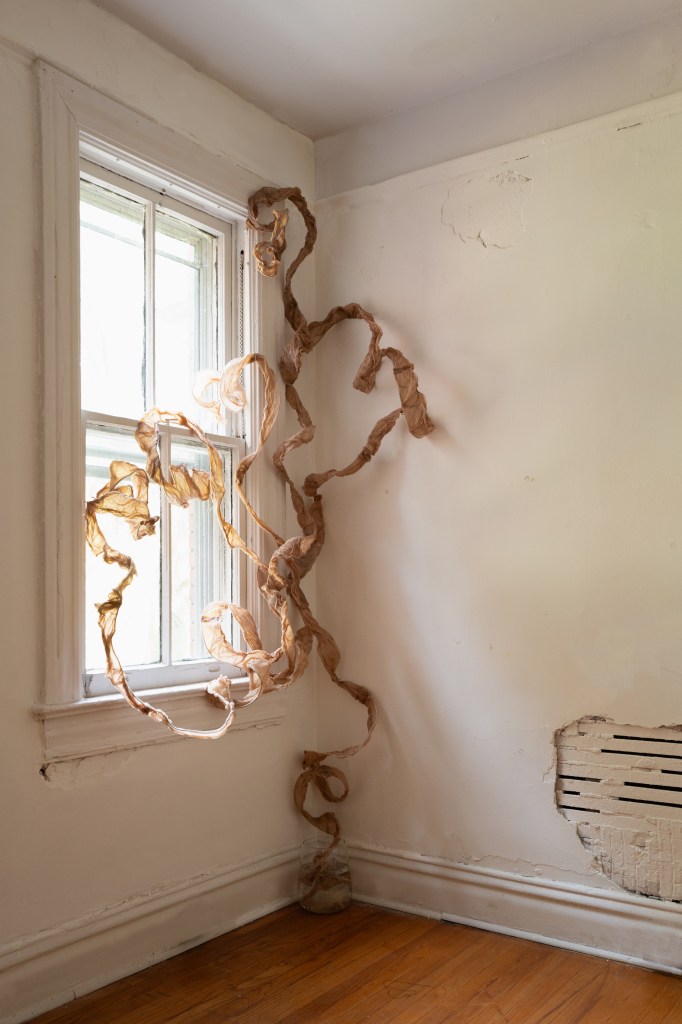
You Build Walls We Climb Them
Nylon hosiery, silicone, aluminum wire, hand marination. Variable dimensions
You Build Walls We Climb Them reinterprets industrialized nylon, to take the form of living vines. This work orients us to our relationship with nylon and its associations with the body and disposability. By mimicking rituals of the kitchen, these vines were formed through rituals of “marination”, involving intensive time and touch. With a lineage of family members who worked in textile factories, Rose Malenfant centers slow interaction with industrialized textiles as an act of dissolving survival-based tempos of labor. With unsustainable patterns of extraction, hyper production, and over consumption, an estimated 8 million pairs of nylon tights go to the landfill or are incinerated annually. By working with this material, Malenfant reframes nylon as a perennial plant; one that is alive, lasts through the seasons, and is in closer communion with the earth these materials once came from. An act of return for them– to be surrounded by, and in proximity with the source.
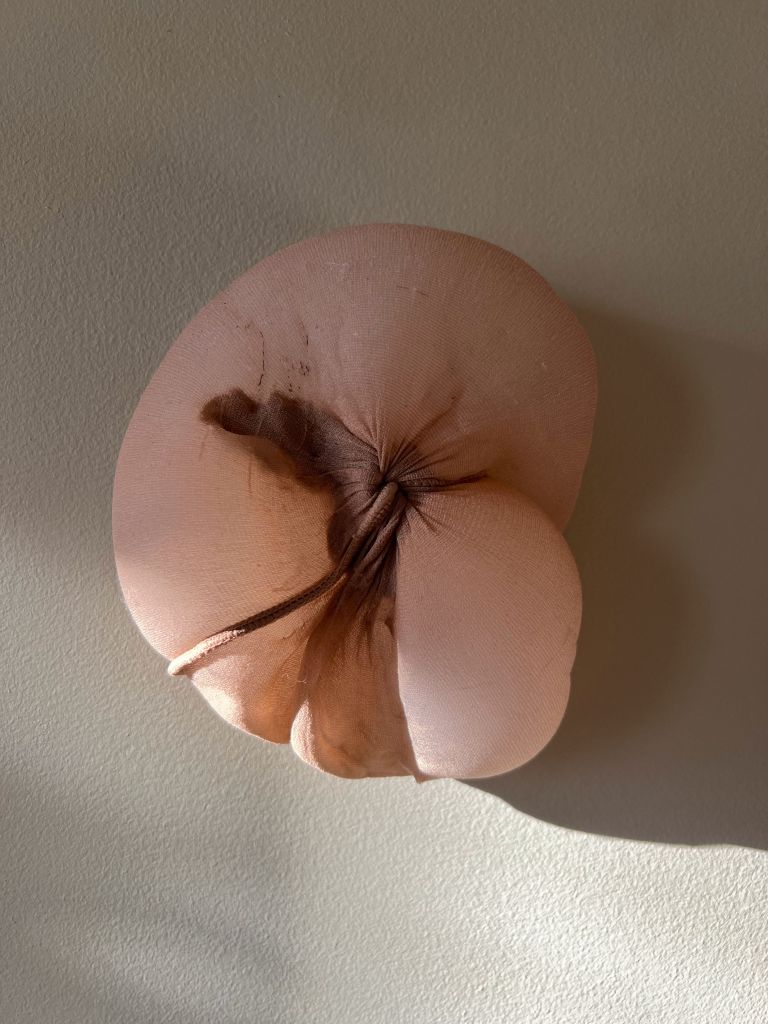
Synthetic Hug
Nylon hosiery, silicone, time, gravity, tree’s embrace. 5x4x3″
Synthetic Hug examines the double entendre of curing- how we describe liquid materials setting analogous to our human bodies “becoming.” By draping a sack of nylon and silicone in the branches of a tree, this material is being held, formed, and cured by the tree’s embrace while simliarly forming according to its own limitations and eases of movement. On one hand this shows how our actions are informed by the Earth rather than effacing the natural world. On the other, it unmasks manufactured power dynamics between human and non-human, by highlighting the object’s agency, preferences, and interactions.
The first “Synthetic Hug” of this series was formed by time, gravity, and a tree’s embrace in Albuquerque, New Mexico.
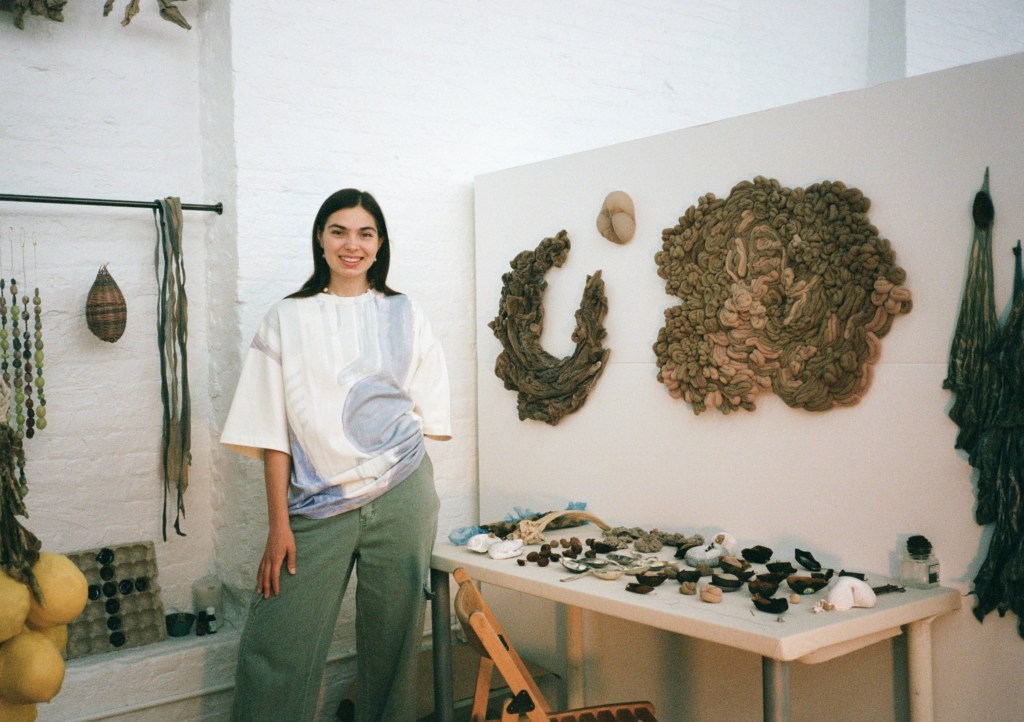
“My practice is informed by family history as I look to cultural traditions, food wisdom, or meditations on the loss of generational practices. My lineage is Italian, Lemko Carpatho-Rusyn and Quebecois. Referencing family roots and labor, I work to invent new rituals centering materiality, repair, and embodied memory.
I’m glad to show these sculptures reorienting industrialized materials in our natural environment. It’s an act of return for them– to be surrounded by, and in proximity with the source.”
IG: @rose.mal.enfant
rosemalenfant.com
 Woven riot