
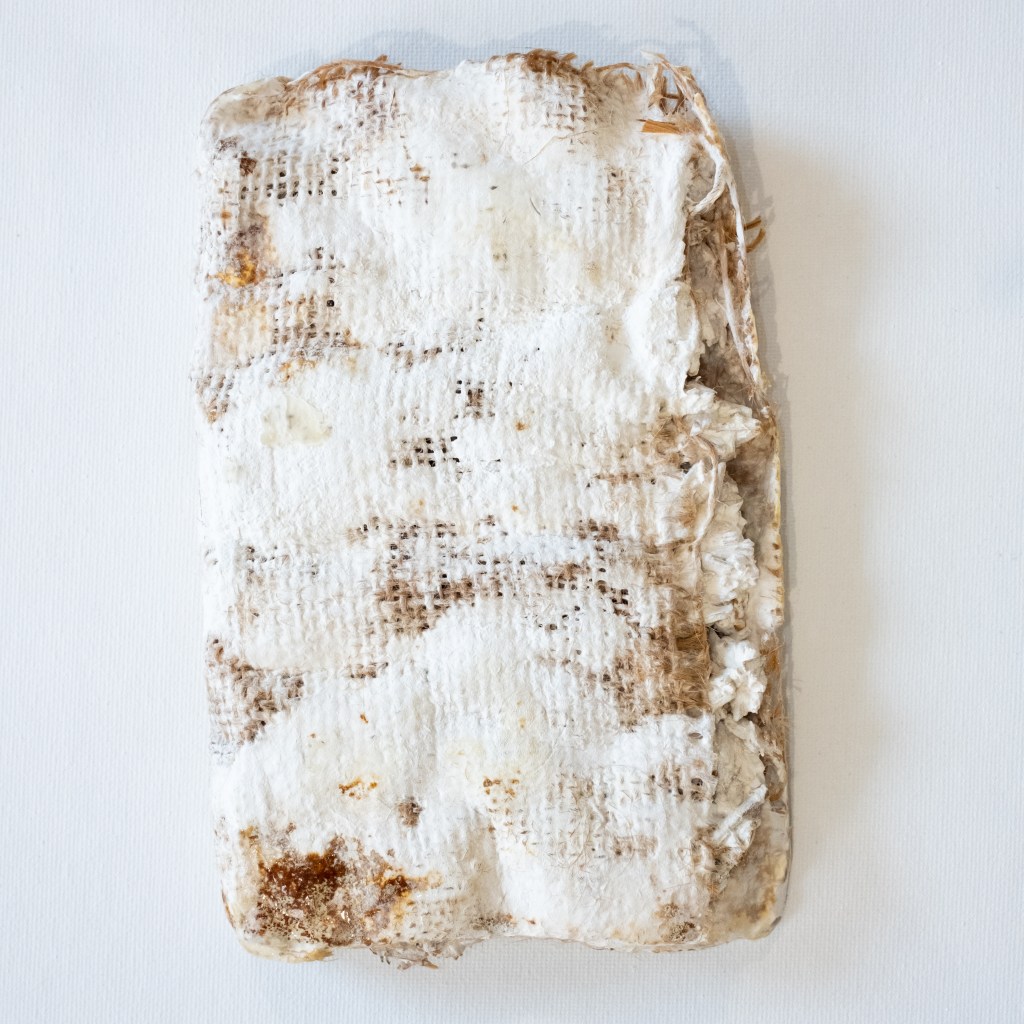
The Holobiont
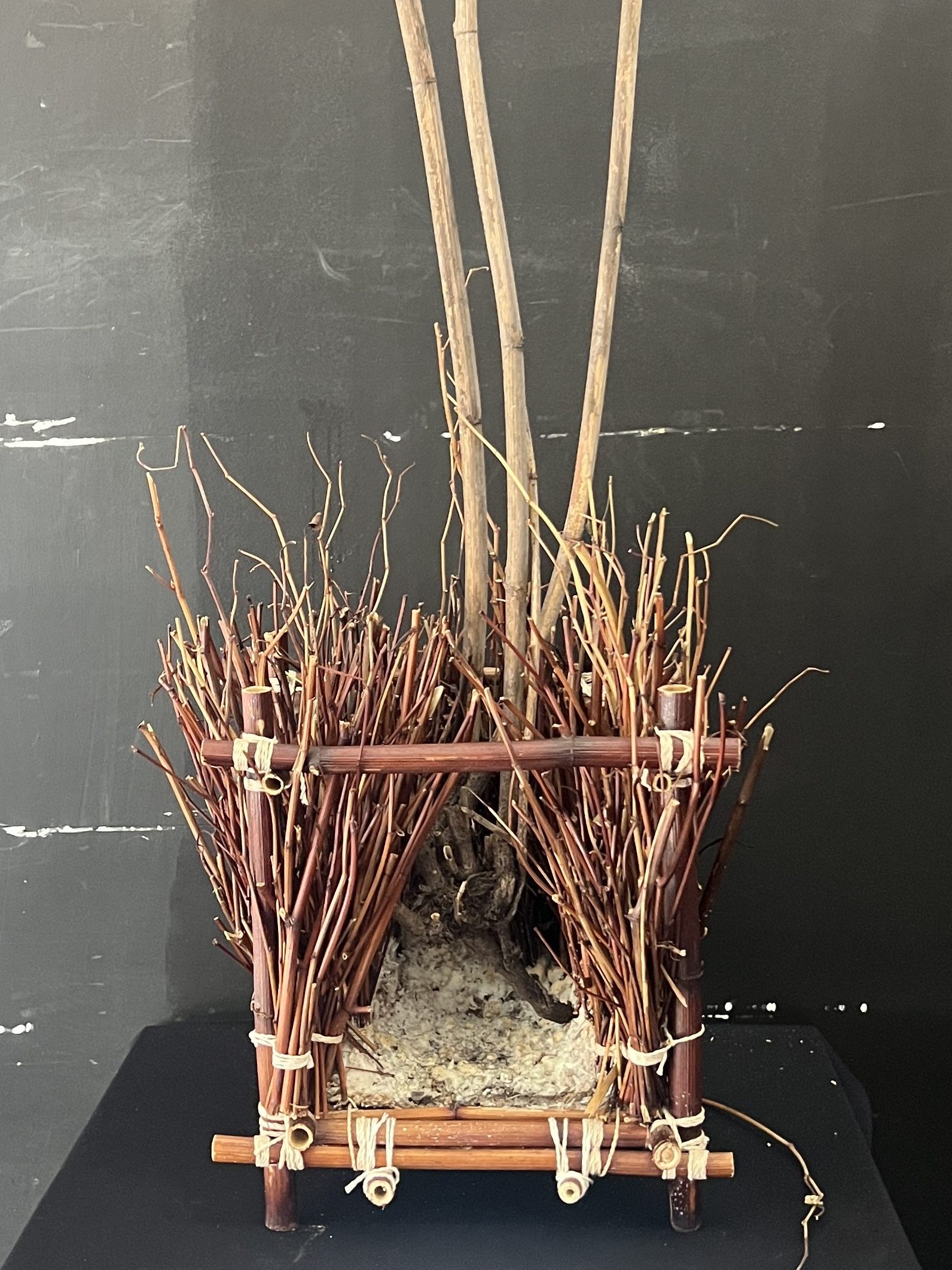
The invasive Japanese knotweed, woven and bound by native Ganoderma Applanatum. 15x15x48″
“The Holobiont is a reminder to look beyond the singular organism to see the greater ecosystem”; we are not individuals. We are a collection of many, bound by symbiosis. Japanese Knotweed, an invasive plant species in the U.S., is known for its tenacious and seemingly never-ending rhizome. Each singular plant appears as one, but is directly supported by the colony. Favoring disturbed soils, the Japanese Knotweed thrives with the help of native fungi and bacteria, shown here through bounding dried and woven Japanese Knotweed with native Ganoderma Applanatum. When the plants died and laid down to dry, new fungi and bacteria formed biofilms to slowly digest the stalks. Then, Ganoderma Applanatum further digests, binds and encloses this rootball. As the observer peers into the hidden network of this holobiont, we ask, ‘Is this newly formed network of local fungi native even if the scaffold is of foreign matter?’
Brian Houstle is an Architect and builder by training. Currently, he supports New York State’s Affordable Housing decarbonization efforts as a Sustainability Specialist, providing expertise in building systems design and materials. His work spans scales ranging from residential construction to furniture to novel material composites. Drawn to Genspace by the opportunity to expand his work with fungi, he focuses on developing new materials for the construction industry and supporting biomaterials education. As the Biomaterials Studio Lead, Brian supports artists and designers with their material explorations.
IG: @bahoustle
 Woven riot